Quick answer: Before piloting an AI agent, define allowed data, tool permissions, human authority, evaluation tests, failure response, and shutdown conditions.
Why this problem persists
AI tools can affect data handling and decisions before oversight is designed. Vendor demos show the happy path, while the questions that matter concern what the agent can see, what it can do without a person and how it fails.
Before the first vendor call, write down the single task the agent would perform and the most harmful action it could take if it were wrong. Then list the data it would touch and who would approve its outputs. If the team cannot agree on these answers internally, the vendor's answers will be hard to judge, and the pilot scope is not ready.
Worked example: A small AI-agent pilot with stop conditions
Illustrative scenario. A procurement team evaluates an agent that reads incoming invoices and proposes purchase-order matches. The vendor demo looks accurate, but the model may retain document content, invoke external tools or generate confident mismatches. Establish a sandbox with masked data, logged tool calls, no payment authority and a human decision-maker.
| Gate | Evidence required before expansion |
|---|---|
| Data handling | Retention, subprocessors, model-training terms |
| Tool permissions | Least-privilege service account and action allowlist |
| Evaluation | Representative test set and documented error categories |
| Human oversight | Named reviewer for exceptions and irreversible actions |
| Exit/rollback | Shutoff procedure, data deletion and export plan |
Define stop conditions before a pilot starts: access outside the allowlist, confidential-data leakage, repeated unreviewed actions, or unexplained changes to vendor behavior. Measure false matches as well as successful matches, and test adversarial or malformed documents. These are example governance gates, not a guarantee of safe AI. The MeritSOLV AI Vendor & Agent Evaluation offering was listed as a pilot in the reviewed catalog. Do not represent it as a generally available production service.
A practical five-step method
1. Define the use case and expected human decision authority
Specify the narrow business task, affected users and highest-risk action the agent could take. Forbid irreversible outputs during initial evaluation.
2. Ask what information reaches the vendor and how it is retained
Map prompts, retrieved documents, logs, integrations, training-use terms, retention, subprocessors and deletion options before data is sent.
3. Evaluate testing claims against documented limitations
Use an evaluation corpus that includes edge cases, malformed documents, prompt attacks and confidence-sensitive errors. Log tool invocations.
4. Define human oversight, failure handling and escalation
Require a named human for approvals, an immediate disable control, exception routing and records of decisions that could affect money or customers.
5. Set pilot exit criteria and evidence requirements before procurement
Define clear performance and safety exit criteria, including leak/overreach stop rules, before approving expansion beyond a masked-data sandbox.
What “done” should look like
For this problem, aim for a vendor evaluation rubric with unresolved questions and decision gates. It should show provenance, version, owner and outstanding exceptions. The sponsor needs to see what was decided, what was not decided and which actions remain. State the population, sampling method and limitations of any review. A scoped example is not a full assurance engagement.
A quick acceptance test
Ask someone outside the delivery team to locate the latest artifact, identify its accountable owner, explain the top unresolved issue and determine the next authorized action. If any answer depends on someone’s memory, the handoff is incomplete.
Common mistake to avoid
Assuming a vendor demonstration establishes safety, privacy or reliability. The remedy is not more paperwork for its own sake. Use the smallest set of artifacts that demonstrates scope, evidence, review and the next decision. Automate only after the underlying responsibilities and exceptions are clear.
Copy-ready working checklist
- Define the use case and expected human decision authority.
- Ask what information reaches the vendor and how it is retained.
- Evaluate testing claims against documented limitations.
- Define human oversight, failure handling and escalation.
- Set pilot exit criteria and evidence requirements before procurement.
- Confirm who approves the final output and how corrections will be handled.
- Archive the approved version and record the next review or follow-up date.
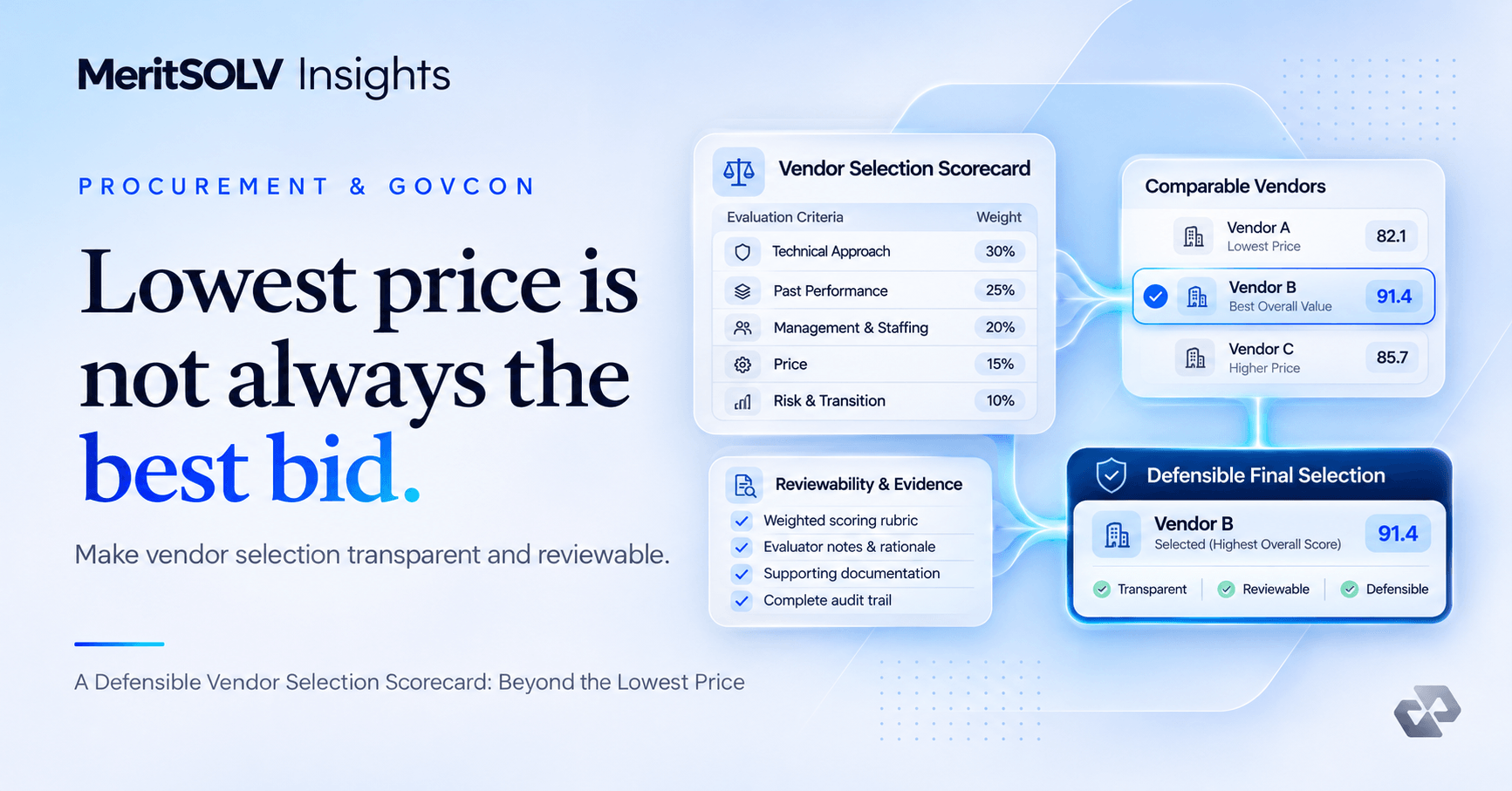
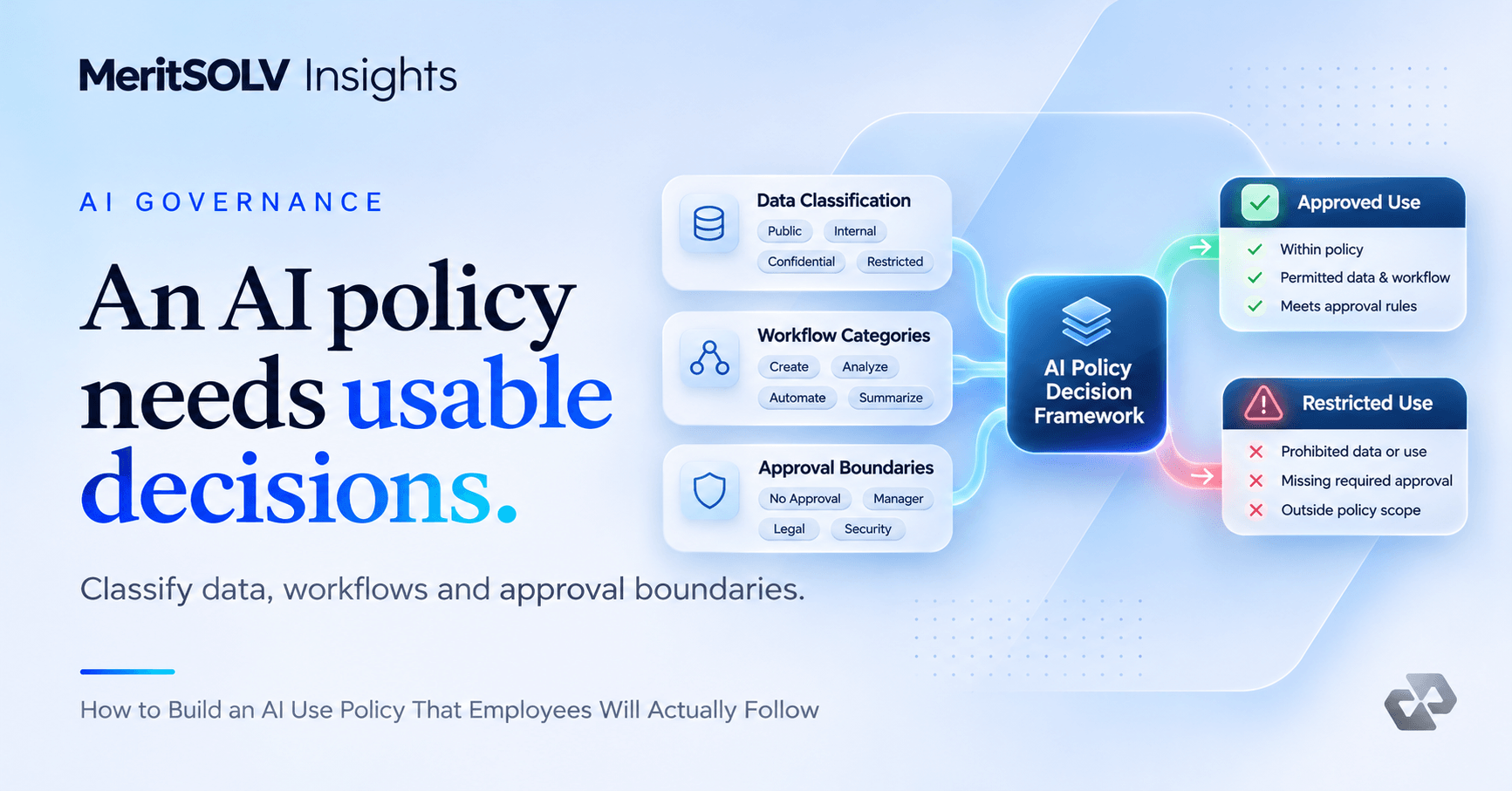
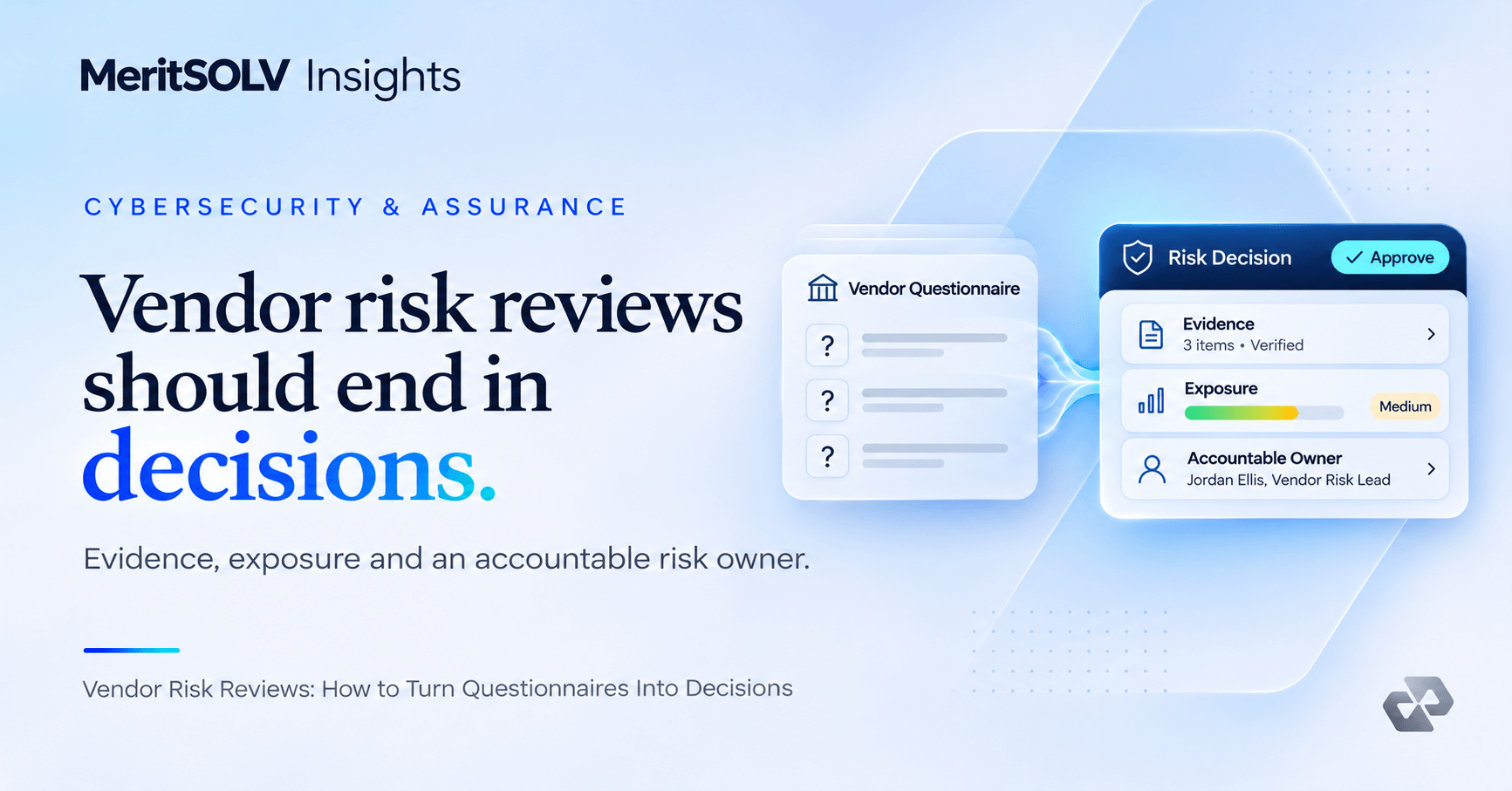
Questions about retention, subprocessors and deletion overlap with a standard vendor risk review, and the internal rules for which data employees may share belong in your AI use policy. When more than one vendor reaches the pilot stage, compare them with a defensible vendor selection scorecard.
How this connects to MeritSOLV
Pilot capability: MeritSOLV currently lists this as a pilot, not an available production service.
MeritSOLV’s AI Vendor & Agent Evaluation provides a useful next reference for teams that want a defined output rather than an unbounded consulting engagement. Its model emphasizes a written scope, a named delivery lead, independent review and documented acceptance. The decision about what to implement, approve or accept remains with the customer.
For the broader set of options, review the MeritSOLV solution catalog and how the process works. Use a small, well-defined first engagement to validate whether the operating model fits your needs.
Frequently asked questions
What is the biggest risk in evaluating AI agents?
A mismatch between the system’s authority, data access and evidence of safe oversight.
Is this MeritSOLV service available now?
The current MeritSOLV catalog labels AI Vendor & Agent Evaluation as a pilot, not a generally available package.
Standards and further reading
Next step
Choose one real example, complete the checklist, and identify the evidence that would make a decision easier this week. Only after that should you decide whether an internal owner or a scoped external engagement is the right path.
These examples are illustrative, not reports of MeritSOLV™ client engagements. This guide is general operational information, not legal, audit, or certification advice. Review the cited standards and apply your organization's requirements.