Quick answer: Begin cloud-hygiene assessment with an approved account boundary and read-only evidence. Separate observations from verified risk and production change requests.
Why this problem persists
Cloud estates become hard to govern when inventories and architecture records lag. Asking for broad administrator access just to find out what exists creates risk of its own, and unvalidated findings can trigger rushed changes.
Begin by writing the account boundary in one sentence: which subscriptions, projects or accounts are in scope, and which are explicitly out. Then list the read-only exports the owners can provide, such as resource inventories, policy settings and cost reports. Treat everything found as an observation until an owner confirms it, and keep change requests in a separate list.
Worked example: Read-only cloud review: evidence first, changes later
Illustrative scenario. A small product team operates two cloud subscriptions and one inherited test account. Rather than asking an external assessor for administrator rights, it provides policy exports, resource inventory, cost categories and approved screenshots in a time-limited read-only collection. The assessment finds publicly reachable storage configuration, inconsistent tags and missing cost allocation on a shared subscription. The report separates observed configuration from confirmed exploitable condition.
| Finding | Evidence | Risk owner decision |
|---|---|---|
| Unknown public exposure | Resource policy + network path evidence | Request validation before severity claim |
| Missing owner tag | Inventory export | Assign owner and remediation window |
| Broad role assignment | Role-binding snapshot | Review least privilege with platform team |
| No recovery drill | Backup policy only | Plan a restoration test |
Avoid the false promise of a 'no-impact scan.' Even read-only collection can expose sensitive metadata and consume API capacity. Agree on account boundaries, sensitive-data redaction, access expiration and approved collection methods beforehand. Any production changes should occur later through the customer's normal change process.
A practical five-step method
1. Agree which accounts, subscriptions and environments are in scope
Get written approval naming each tenant/account, environment, data category and excluded resource before requesting any export or permission.
2. Gather approved read-only exports and architecture diagrams
Prefer a limited evidence pack with configuration snapshots, logging coverage, role bindings and architecture boundaries over unrestricted cloud console access.
3. Inventory resources, owners, environments and labels
Normalize tags and ownership. Mark shared resources, test subscriptions and orphaned cloud identities so recommendations address the actual operating footprint.
4. Document cost and configuration observations as hypotheses requiring validation
Label each observation as verified, suspected or outside scope, and separate cost optimization from security exposure to avoid misleading risk rankings.
5. Rank findings by exposure, business impact, effort and decision owner
Propose validated follow-up steps with owner, estimated effort and required change authorization. Do not present evidence collection as production remediation.
What “done” should look like
For this problem, aim for a reviewed inventory and prioritized cloud observations worksheet. It should show provenance, version, owner and outstanding exceptions. The sponsor needs to see what was decided, what was not decided and which actions remain. State the population, sampling method and limitations of any review. A scoped example is not a full assurance engagement.
A quick acceptance test
Ask someone outside the delivery team to locate the latest artifact, identify its accountable owner, explain the top unresolved issue and determine the next authorized action. If any answer depends on someone’s memory, the handoff is incomplete.
Common mistake to avoid
Changing cloud settings while performing what was meant to be documentation-only discovery. The remedy is not more paperwork for its own sake. Use the smallest set of artifacts that demonstrates scope, evidence, review and the next decision. Automate only after the underlying responsibilities and exceptions are clear.
Copy-ready working checklist
- Agree which accounts, subscriptions and environments are in scope.
- Gather approved read-only exports and architecture diagrams.
- Inventory resources, owners, environments and labels.
- Document cost and configuration observations as hypotheses requiring validation.
- Rank findings by exposure, business impact, effort and decision owner.
- Confirm who approves the final output and how corrections will be handled.
- Archive the approved version and record the next review or follow-up date.
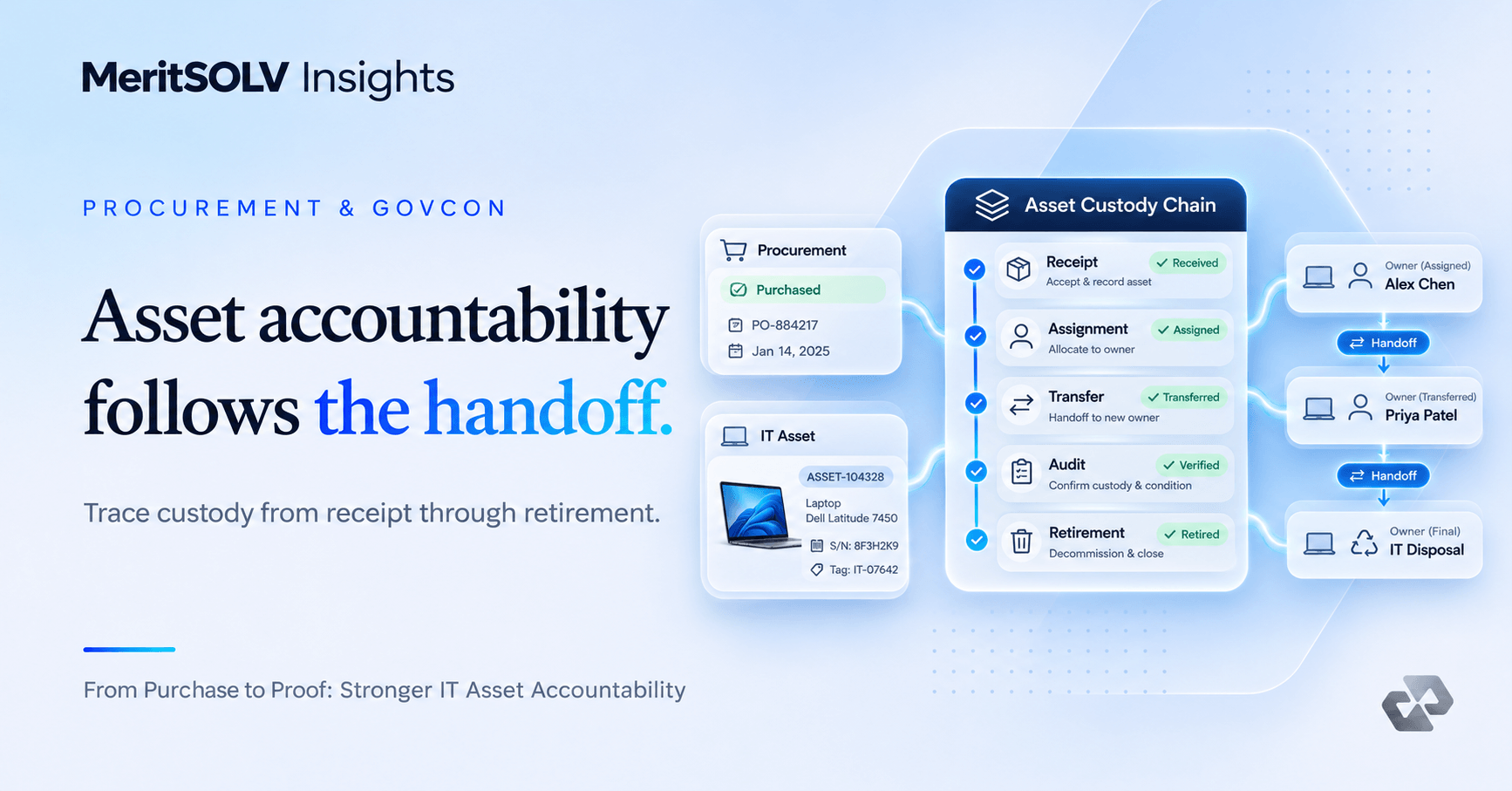
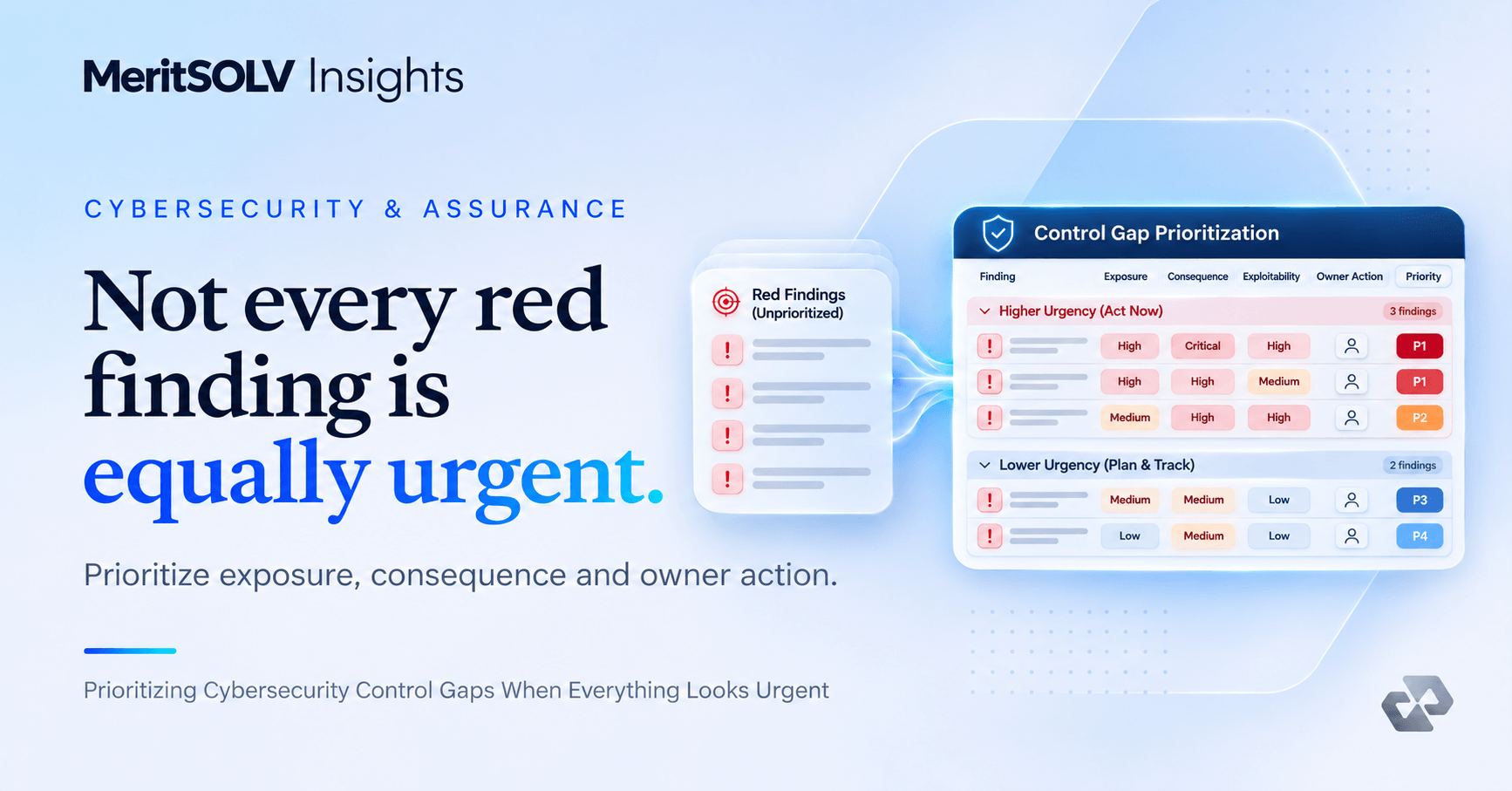
When the observations are validated, rank them with the exposure-based method in prioritizing cybersecurity control gaps. Orphaned resources and unclear ownership often trace back to weak IT asset accountability.
How this connects to MeritSOLV
MeritSOLV currently lists the linked package as available for a scoped proposal, subject to triage and approval.
MeritSOLV’s Cloud Hygiene Documentation provides a useful next reference for teams that want a defined output rather than an unbounded consulting engagement. Its model emphasizes a written scope, a named delivery lead, independent review and documented acceptance. The decision about what to implement, approve or accept remains with the customer.
For the broader set of options, review the MeritSOLV solution catalog and how the process works. Use a small, well-defined first engagement to validate whether the operating model fits your needs.
Frequently asked questions
Can cloud hygiene begin read-only?
Yes. A properly scoped review can document observations without modifying production resources.
Is a configuration observation a verified vulnerability?
Not necessarily. Findings should identify evidence, assumptions and validation needed.
Standards and further reading
Next step
Choose one real example, complete the checklist, and identify the evidence that would make a decision easier this week. Only after that should you decide whether an internal owner or a scoped external engagement is the right path.
These examples are illustrative, not reports of MeritSOLV™ client engagements. This guide is general operational information, not legal, audit, or certification advice. Review the cited standards and apply your organization's requirements.