Quick answer: Audit readiness can be sustained through a scheduled evidence-owner cycle. It does not eliminate separate continuous-monitoring obligations where applicable.
Why this problem persists
Once an assessment ends, evidence quickly becomes outdated. Teams that collect evidence only when an audit is announced end up rebuilding screenshots and approvals that should have been saved when the control ran.
Look at the last audit request list and mark which items had to be recreated after the fact. Those items show where an owner, a storage location or a collection date was missing. Assign each one a refresh cadence that matches how often the control actually operates, and record when each artifact stops being valid.
Worked example: Continuous readiness is not continuous surveillance
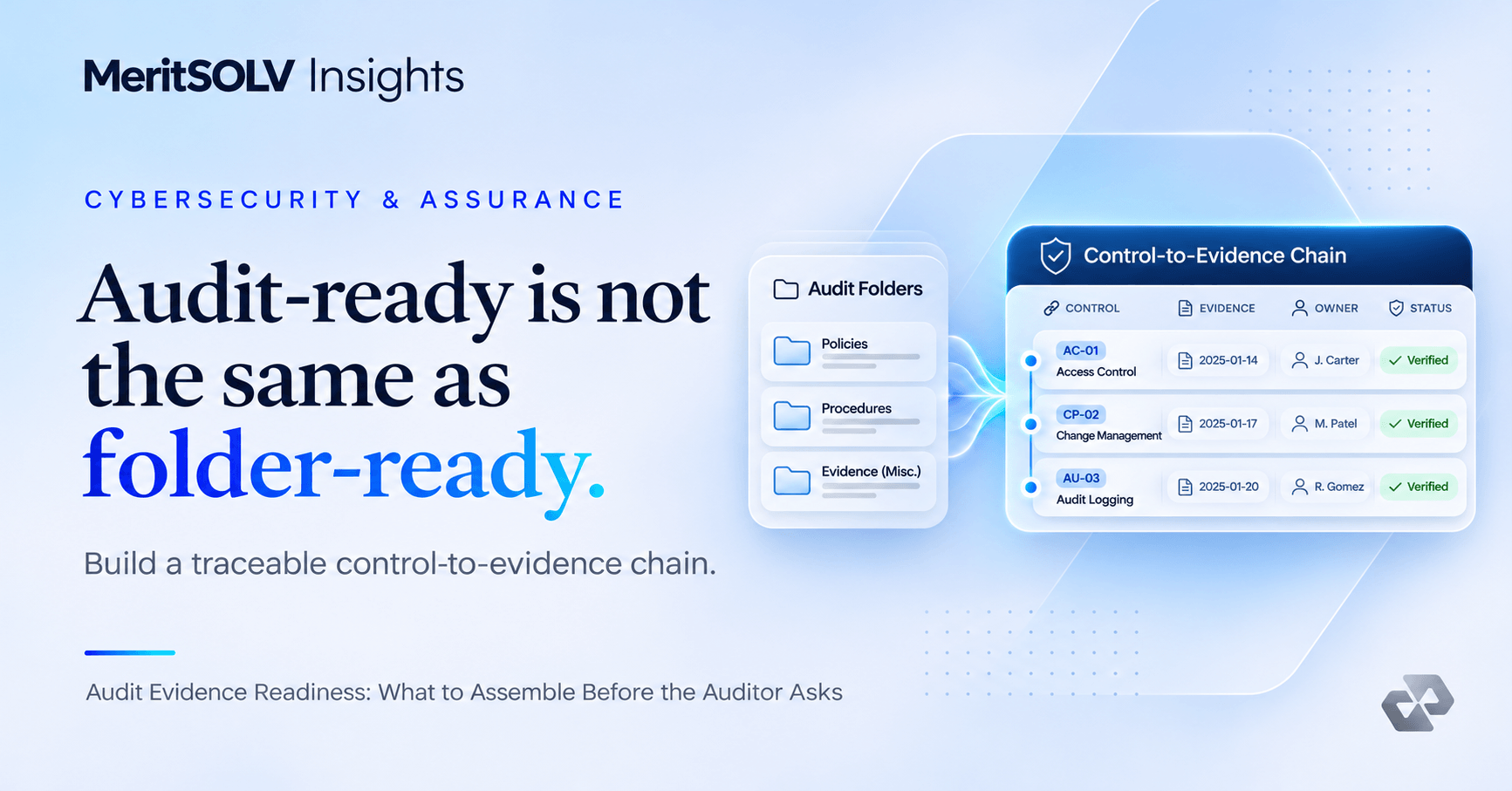
Illustrative scenario. An organization has six recurring quarterly controls and spends three weeks reconstructing screenshots before each audit. It can reduce the scramble without buying a continuous monitoring platform: assign evidence owners, set a retention location, establish dated snapshots and require exception follow-up as part of the regular control cycle.
| Evidence object | Cadence | Health signal |
|---|---|---|
| Privileged access sign-off | Quarterly | Reviewed population + exceptions |
| Restore-test result | Per approved recovery schedule | Signed test outcome |
| Policy approval | Annual or event-driven | Current owner and effective date |
| Vendor reassessment | Risk-based | Material changes and open conditions |
Two terms are different: continuous audit readiness means the documentation is organized and retrievable throughout the year. Continuous monitoring refers to sustained observation/assessment activities and may be an appropriate separate requirement for some environments. This editorial approach does not replace monitoring obligations. Make 'unknown / not supplied / outside scope' visible rather than treating blank evidence cells as compliant.
A practical five-step method
1. Define the evidence taxonomy and owners
List evidence objects by control and owner, distinguishing policy, configuration, transaction record and management approval.
2. Set refresh cadences based on control and artifact volatility
Refresh evidence when control operation demands it. Highly changing populations need a different cadence from annual approved policy documents.
3. Record provenance, validity period and change history
Retain extraction date, source, time window, version, completeness notes and approved exceptions so findings can be reconstructed later.
4. Escalate missing evidence before the reporting deadline
Notify owners before collection windows close. Escalate missing artifacts early rather than fabricating retroactive approvals.
5. Close each cycle with review, sign-off and an improvement log
Require reviewer sign-off and an improvement record after each cycle, with a separate plan for continuous monitoring where required.
What “done” should look like
For this problem, aim for a recurring evidence refresh and reviewed management status package. It should show provenance, version, owner and outstanding exceptions. The sponsor needs to see what was decided, what was not decided and which actions remain. State the population, sampling method and limitations of any review. A scoped example is not a full assurance engagement.
A quick acceptance test
Ask someone outside the delivery team to locate the latest artifact, identify its accountable owner, explain the top unresolved issue and determine the next authorized action. If any answer depends on someone’s memory, the handoff is incomplete.
Common mistake to avoid
Calling a periodic documentation cycle continuous technical control monitoring. The remedy is not more paperwork for its own sake. Use the smallest set of artifacts that demonstrates scope, evidence, review and the next decision. Automate only after the underlying responsibilities and exceptions are clear.
Copy-ready working checklist
- Define the evidence taxonomy and owners.
- Set refresh cadences based on control and artifact volatility.
- Record provenance, validity period and change history.
- Escalate missing evidence before the reporting deadline.
- Close each cycle with review, sign-off and an improvement log.
- Confirm who approves the final output and how corrections will be handled.
- Archive the approved version and record the next review or follow-up date.
If you are preparing for a specific audit now, start with the audit evidence readiness checklist and then use this cycle to keep it current.
How this connects to MeritSOLV
MeritSOLV currently lists the linked package as available for a scoped proposal, subject to triage and approval.
MeritSOLV’s Security EvidenceOps provides a useful next reference for teams that want a defined output rather than an unbounded consulting engagement. Its model emphasizes a written scope, a named delivery lead, independent review and documented acceptance. The decision about what to implement, approve or accept remains with the customer.
For the broader set of options, review the MeritSOLV solution catalog and how the process works. Use a small, well-defined first engagement to validate whether the operating model fits your needs.
Frequently asked questions
What is evidence freshness?
The degree to which an artifact represents the relevant control state and review period.
Is EvidenceOps an audit opinion?
No. It structures records and follow-up. Auditors and organizations make their own determinations.
Standards and further reading
Next step
Choose one real example, complete the checklist, and identify the evidence that would make a decision easier this week. Only after that should you decide whether an internal owner or a scoped external engagement is the right path.
These examples are illustrative, not reports of MeritSOLV™ client engagements. This guide is general operational information, not legal, audit, or certification advice. Review the cited standards and apply your organization's requirements.