Quick answer: Service-desk improvement starts by measuring queues, ticket handoffs, waiting states, and reopens before evaluating new software.
Why this problem persists
Ticketing platforms can record dysfunction as efficiently as they record progress. A new platform will reproduce the same delays if categories, ownership and waiting rules stay unclear.
Pull a small sample of recently closed tickets and trace each one from the first contact to resolution. Note every reassignment, every period spent waiting and every time the requester was asked for information that should have been captured at intake. These patterns show which workflow fixes to make before any tool decision.
Worked example: Improve the queue before changing the ticketing platform
Illustrative scenario. A 12-person service desk averages 280 tickets weekly. A review of 60 anonymized tickets finds three recurring delays: missing initial information, two ownership transfers before resolution, and tickets sitting in 'waiting on customer' without a follow-up date. Buying a new platform would reproduce the same failures unless the workflow changes.
| Measure | How to use it responsibly |
|---|---|
| First-touch completeness | Sample tickets containing required diagnostic fields |
| Reassignment rate | Transfers per ticket, grouped by request class |
| Aging by status | Identify stalls hidden in 'pending' queues |
| Reopen reason | Separate premature closure from new issues |
| Self-service success | Verify that users resolve without reopening |
Avoid one headline SLA number. Median response time can improve while difficult cases deteriorate. Segment by severity and request category, then use a small number of prioritized interventions: form design, queue owner, knowledge article update, or escalation rule. Retest after two normal work cycles to distinguish a sustained change from a one-week spike.
A practical five-step method
1. Sample redacted incidents and requests to establish demand patterns
Select a representative ticket sample and remove private customer information. Tag each by type, urgency, assignment history, resolution and reopen outcome.
2. Identify ambiguous categories, bounced tickets and escalation bottlenecks
Plot where tickets wait: missing requester data, resolver queue, external vendor or customer response. Distinguish true backlog from legitimate dependencies.
3. Define ownership boundaries between first-line support and resolver teams
Define which team owns triage, specialist diagnostics and communication at each stage. Stop tickets bouncing between two queues without a handoff protocol.
4. Set measurable service indicators with explicit calculation rules
Agree on response, reassignment, aging and reopen definitions with the service owner, then report distributions by severity rather than a single blended average.
5. Sequence process changes and validate their effect before changing platforms
Trial intake and escalation changes for at least two normal cycles, and compare like-for-like requests before investing in platform replacement.
What “done” should look like
For this problem, aim for an escalation matrix, KPI definitions and sequenced improvement backlog. It should show provenance, version, owner and outstanding exceptions. The sponsor needs to see what was decided, what was not decided and which actions remain. State the population, sampling method and limitations of any review. A scoped example is not a full assurance engagement.
A quick acceptance test
Ask someone outside the delivery team to locate the latest artifact, identify its accountable owner, explain the top unresolved issue and determine the next authorized action. If any answer depends on someone’s memory, the handoff is incomplete.
Common mistake to avoid
Assuming ticket closure time alone measures a successful customer outcome. The remedy is not more paperwork for its own sake. Use the smallest set of artifacts that demonstrates scope, evidence, review and the next decision. Automate only after the underlying responsibilities and exceptions are clear.
Copy-ready working checklist
- Sample redacted incidents and requests to establish demand patterns.
- Identify ambiguous categories, bounced tickets and escalation bottlenecks.
- Define ownership boundaries between first-line support and resolver teams.
- Set measurable service indicators with explicit calculation rules.
- Sequence process changes and validate their effect before changing platforms.
- Confirm who approves the final output and how corrections will be handled.
- Archive the approved version and record the next review or follow-up date.
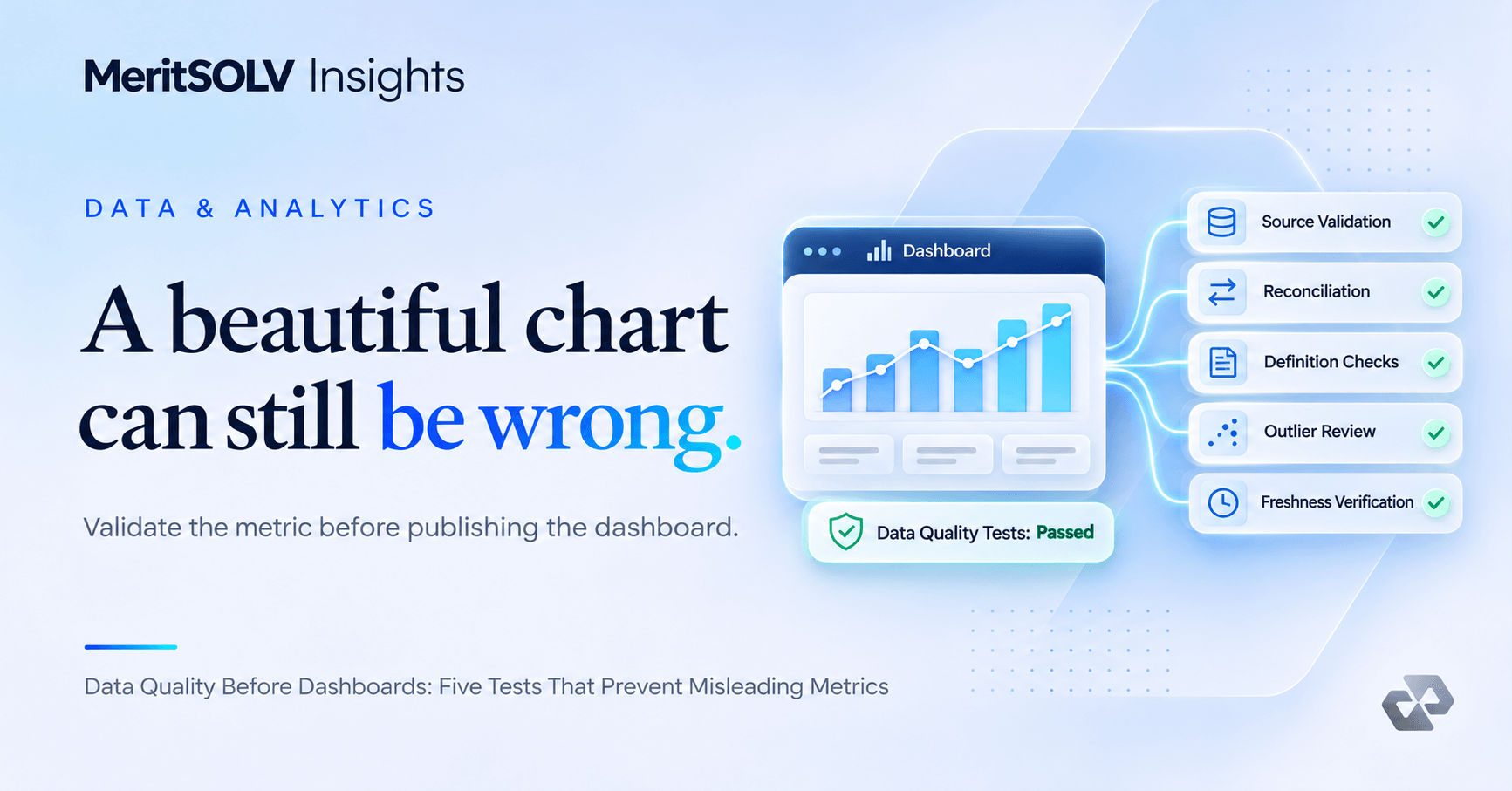
Service-desk measures need the same definition and testing discipline described in data quality before dashboards, or the numbers will hide the problems they are meant to show.
How this connects to MeritSOLV
MeritSOLV currently lists the linked package as available for a scoped proposal, subject to triage and approval.
MeritSOLV’s ITSM & Service Desk Improvement Blueprint provides a useful next reference for teams that want a defined output rather than an unbounded consulting engagement. Its model emphasizes a written scope, a named delivery lead, independent review and documented acceptance. The decision about what to implement, approve or accept remains with the customer.
For the broader set of options, review the MeritSOLV solution catalog and how the process works. Use a small, well-defined first engagement to validate whether the operating model fits your needs.
Frequently asked questions
Which service desk KPIs matter?
Depending on the environment: reopen rate, reassignment, aged backlog, response time and customer-reported resolution.
Is a tool migration always necessary?
No. Categorization, ownership and process discipline may be the highest-value first changes.
Standards and further reading
Next step
Choose one real example, complete the checklist, and identify the evidence that would make a decision easier this week. Only after that should you decide whether an internal owner or a scoped external engagement is the right path.
These examples are illustrative, not reports of MeritSOLV™ client engagements. This guide is general operational information, not legal, audit, or certification advice. Review the cited standards and apply your organization's requirements.