Quick answer: Build a security-policy register before rewriting documents: identify authoritative versions, owners, actual operating controls, conflicts, and evidence gaps.
Why this problem persists
Organizations often own dozens of policies but cannot say which are current. Rewriting from scratch adds another version to the pile without resolving which existing document people actually follow.
Collect every policy, standard and guide that people might rely on, including older versions found in shared drives. For each one, record the owner, the approval date and whether a newer document replaces it. Conflicts and missing owners usually appear in the first pass, and they show where rewriting will actually help.
Worked example: A policy inventory is a map, not a rewrite project
Illustrative scenario. A 70-person organization has an 'information security policy,' an outdated remote-work standard and four different versions of a password guide. Before writing a fifth document, create a controlled register that shows which document is authoritative, its owner, approval date, affected systems, related operating procedure and known gaps.
| Inventory field | Example |
|---|---|
| Topic | Access management |
| Document of record | IAM standard v3 |
| Business owner | Head of IT |
| Effective/review date | Date confirmed from approval history |
| Operating evidence | Joiner/mover/leaver tickets |
| Gap | Contractors not covered by current procedure |
A missing document is not automatically a missing control. Conversely, having a policy does not prove it is implemented. Separate policy deficiency, operational deficiency and missing evidence. Use a structured crosswalk to the control catalog that matters to the organization, such as NIST SP 800-53 where appropriate, without asserting that a simple inventory establishes framework compliance.
A practical five-step method
1. Gather the approved policy corpus and versions
Collect only currently approved or review-needed documents from controlled repositories. Retain duplicates and withdrawn versions for the conflict analysis.
2. Index owner, approver, effective date and next review date
Identify policy sponsor, operational owner, approver, effective date, coverage and review cycle for each document.
3. Map documents to business-selected control categories
Map requirements to the organization’s selected control areas, then connect each policy statement to the procedure and evidence that implement it.
4. Flag overlaps, conflicts and missing owner assignments
Log overlapping instructions, contradictory minimums and ownerless topics without declaring every documentation issue a failed technical control.
5. Prioritize updates by impact and implementation dependency
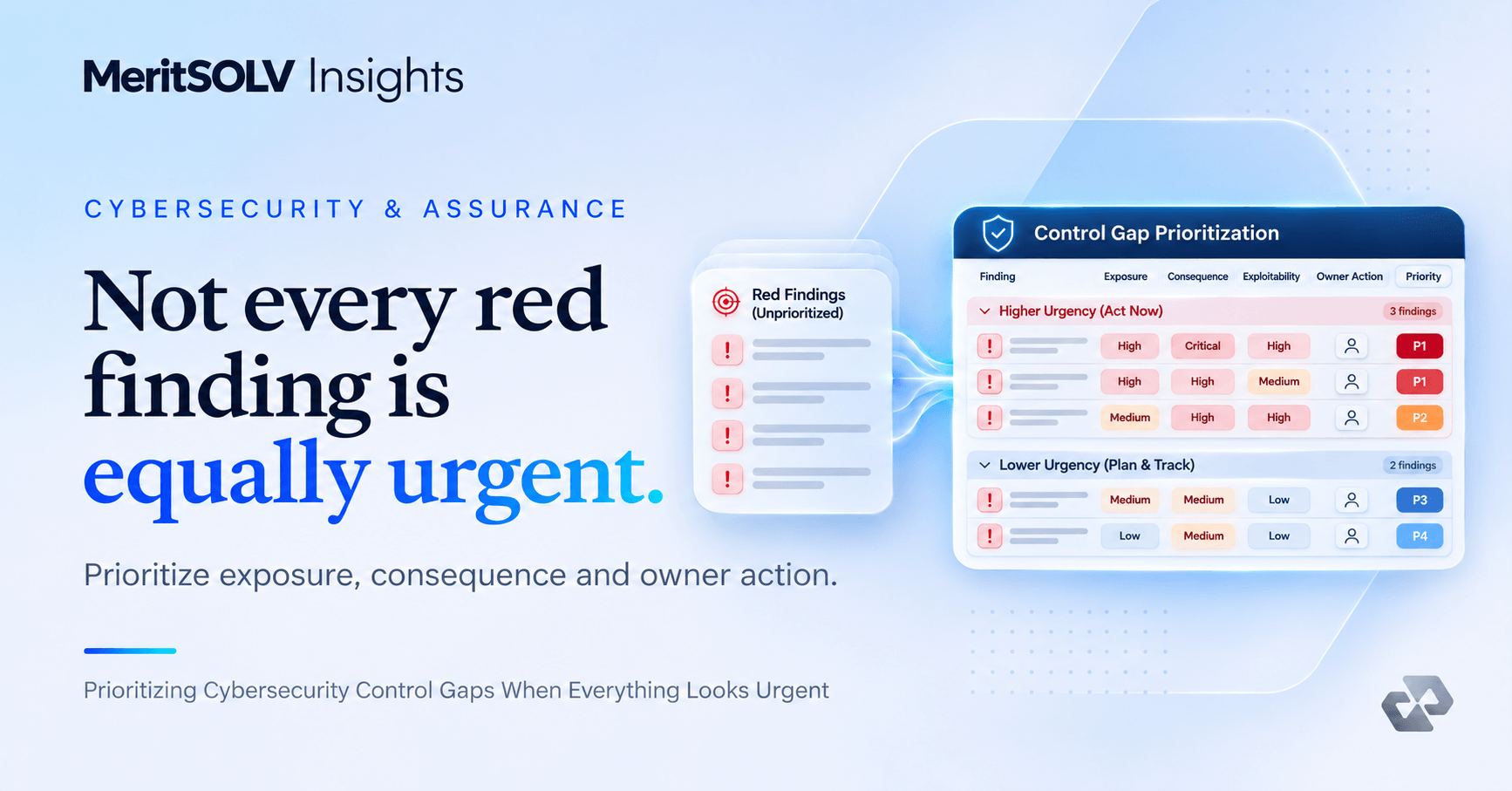
Prioritize fixes by exposure and operating dependency: clarify authority and workflows before performing a broad stylistic rewrite.
What “done” should look like
For this problem, aim for a versioned policy index, gap register and remediation backlog. It should show provenance, version, owner and outstanding exceptions. The sponsor needs to see what was decided, what was not decided and which actions remain. State the population, sampling method and limitations of any review. A scoped example is not a full assurance engagement.
A quick acceptance test
Ask someone outside the delivery team to locate the latest artifact, identify its accountable owner, explain the top unresolved issue and determine the next authorized action. If any answer depends on someone’s memory, the handoff is incomplete.
Common mistake to avoid
Replacing every document before understanding existing ownership and overlap. The remedy is not more paperwork for its own sake. Use the smallest set of artifacts that demonstrates scope, evidence, review and the next decision. Automate only after the underlying responsibilities and exceptions are clear.
Copy-ready working checklist
- Gather the approved policy corpus and versions.
- Index owner, approver, effective date and next review date.
- Map documents to business-selected control categories.
- Flag overlaps, conflicts and missing owner assignments.
- Prioritize updates by impact and implementation dependency.
- Confirm who approves the final output and how corrections will be handled.
- Archive the approved version and record the next review or follow-up date.
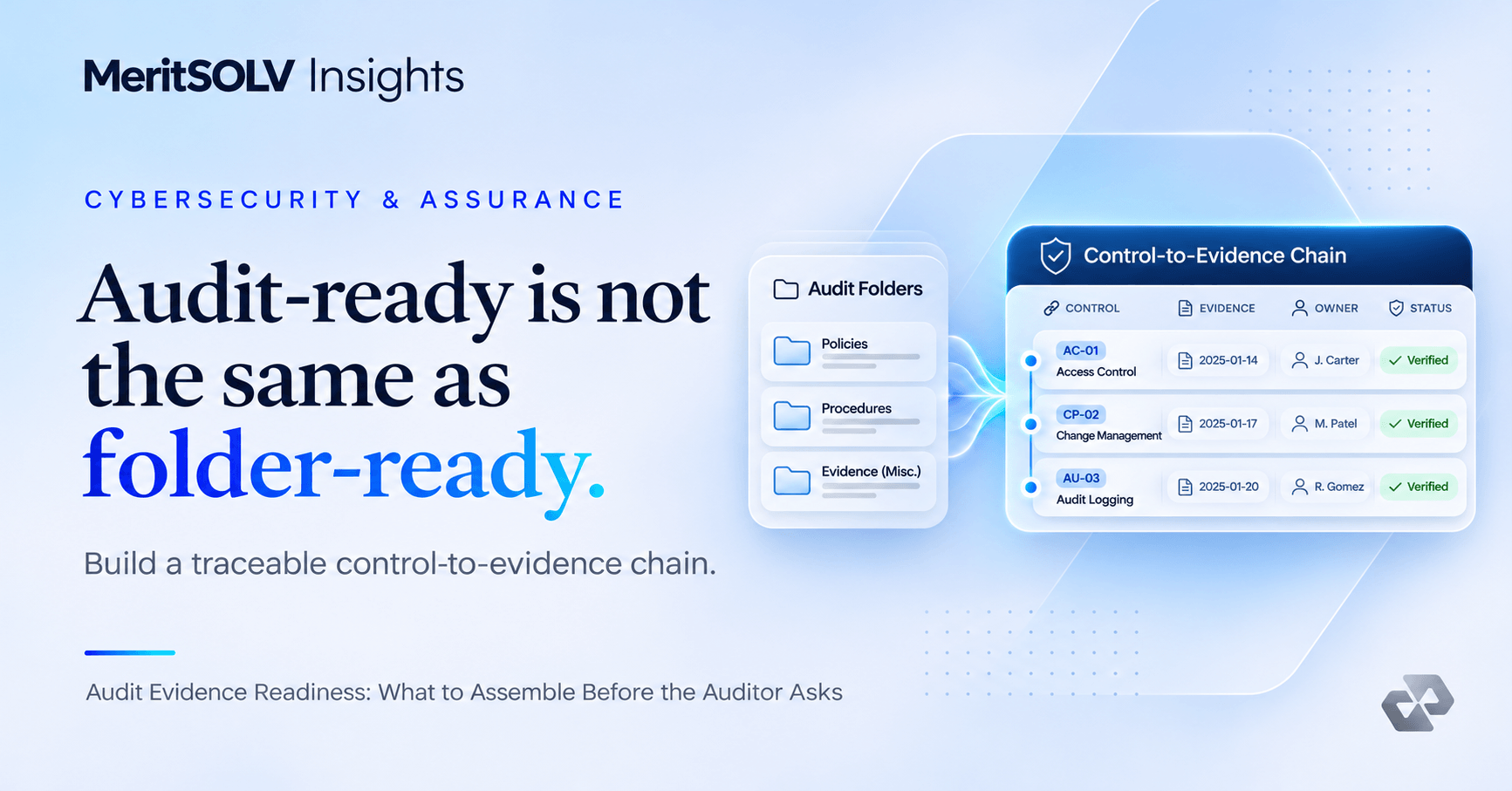
Where a policy exists but proof of operation does not, the audit evidence readiness approach shows what evidence to assemble.
How this connects to MeritSOLV
MeritSOLV currently lists the linked package as available for a scoped proposal, subject to triage and approval.
MeritSOLV’s Security Policy Inventory provides a useful next reference for teams that want a defined output rather than an unbounded consulting engagement. Its model emphasizes a written scope, a named delivery lead, independent review and documented acceptance. The decision about what to implement, approve or accept remains with the customer.
For the broader set of options, review the MeritSOLV solution catalog and how the process works. Use a small, well-defined first engagement to validate whether the operating model fits your needs.
Frequently asked questions
What should a policy inventory include?
Title, owner, status, version, scope, review cycle and mapping to relevant control areas.
Does a complete policy set demonstrate compliance?
No. Policies are governance artifacts. Operating evidence and independent assessment may still be necessary.
Standards and further reading
Next step
Choose one real example, complete the checklist, and identify the evidence that would make a decision easier this week. Only after that should you decide whether an internal owner or a scoped external engagement is the right path.
These examples are illustrative, not reports of MeritSOLV™ client engagements. This guide is general operational information, not legal, audit, or certification advice. Review the cited standards and apply your organization's requirements.